Camel greeting

Tuesday, 11 December 2012

Istanbul's Heritage Under Attack


First off, let me say that I feel remarkably safe living in Istanbul. Of course there are parts of town better avoided in the wee small hours, but that goes for pretty much everywhere, doesn’t it? My fellow Kiwis in the New Zealand Embassy in Ankara thoughtfully send me warnings from time to time about steering clear of places where people congregate – but in a city of fifteen million plus in a country of eighty million, that’s easier said than done. Certainly I’ve been shying away from towns near the Syrian border lately, where rockets and mortar bombs have been straying over from the neighbour’s backyard, making life difficult for Turkish villagers. But I don’t have much call to go down that way, and it hasn’t been such a great hardship.

So I was kind of surprised to read an article published recently in the Economist, circulating among Turkish friends and colleagues, announcing that Istanbul’s heritage is under attack. Well, ok, it’s only the city’s heritage they’re talking about, and there seems to be no immediate threat from chemical weapons and high explosives, but still . . . We all know what happened to the Buddhas of Bamiyan when the Afghan Taliban decided they were a bad influence on the Muslim population. Attacking my heritage can be the thin end of a nasty wedge – you can’t afford to ignore these things. So I read the article.

The first thing I noticed was that there was no byline. Whoever wrote it was, for one reason or another, not revealing his/her identity. I don’t know what the Economist’s policy is on this. I would have thought that normally they’d want to give their correspondent recognition, or at least add an explanation that the writer feared for his life or liberty if his identity was known. Nevertheless, let’s move on.

His or her reason for putting pen to paper seemed to be the announcement of plans to build two large new mosques in prominent parts of the city – Taksim Square, the heart of the old European quarter’, and Çamlıca, ‘Istanbul’s tallest hill’. Now I don’t wish to get embroiled in a debate about whether citizens and ratepayers need these new mosques. It seems to me there’s a good deal of construction going on in Istanbul these days that the majority of people could well do without: huge shopping centres mushrooming everywhere, alongside residential towers of skyscraper proportions . . .

I will note, however, that one of the buildings that attracted my attention on my first visit to Taksim Square was a large Greek Orthodox basilica. As you walk down the two-kilometre stretch of Istiklal Avenue, you will pass two equally impressive Roman Catholic churches, not to mention the monumental palaces of former European embassies, now inhabited by their less prestigious consulates. Stroll down side streets off the main avenue and you will find a large Anglican church, one or two minor Armenian and Orthodox places of worship, and several Jewish synagogues. OK, there is a mosque on Istiklal Avenue, currently undergoing renovation, but considerably less grandiose than its Christian neighbours. If you continue down the hill at the end of the main street, you will find another one, catering, I imagine from its size, to a small congregation of locals. That’s it. Does the area need another mosque? Well, at least it’s open to debate – and after all, Turkey’s population is overwhelmingly Muslim.

As for Çamlica, and the Economist columnist’s assertion that the proposed mosque will ‘dominate the city’s skyline’, anyone who knows Istanbul is well aware that the hill in question is about ten kilometres from the old city. A tourist standing on Çamlica Hill will see the Blue Mosque as a small detail in the distance – and we may safely assume that another tourist, back in the Sultanahmet area, would probably not even know where to look to locate the Hill of Çamlica. If he did, he would more likely notice the forest of television and telephone masts that currently adorn the slopes and summit.

I’m not going to spend time rebutting each of the writer’s nonsensical assertions – that the Blue Mosque’s silhouette has been blighted by skyscrapers, the nearest of which would be five kilometres away in another direction; that urban renewal is pushing out the colourful encampments of ‘gypsies, transvestites and minorities’, whoever the ‘minorities' may be; and the implication that Turkey may have been better off when the army was staging regular coups to oust democratically elected governments. I have a feeling I recognise the writing style, and if I had to hazard a guess, I would say the anonymous author is Andrew ‘What Everyone Needs to know About Turkey’ Finkel. Wonder why he’s stopped signing his name.

One of the big problems with Turkey's heritage is that no one is a hundred percent sure what it is – or, at least, opinion is strongly divided on the subject. Modern Greeks and Hellenophiles of the old school would very likely deny Turkey's right to be considered heir to the Roman and Byzantine Empires. Yet Ottoman Sultans of old felt they had a good claim. Republican Turkey's relationship to that same Ottoman Empire is itself contentious. In founding the Republic, Mustafa Kemal Ataturk had to do away with the imperial line and its claim to the Islamic Caliphate. The current Prime Minister, Recep Tayyip Erdoğan has attracted some criticism for allegedly seeking to recreate a Muslim Ottoman state with himself as Padishah. Now, however, it seems the Istanbul elite have adopted the Ottomans as their own, and are defending their right to glory in the life and loves of Sultan Suleiman the Magnificent through a popular soap opera. It’s a confusing business, for sure.

A former English colleague of mine worked, as a young man, on an archeological dig in the centre of old Istanbul. They were excavating the ruins of an ancient Byzantine church, St Polyeuctus. I passed by the site recently with some visitors from abroad, and found it fenced and neglected, clearly home to a community of otherwise homeless souls. It would take a brave and determined student of history to gain entrance and examine the remains today. I can understand Chris's anger with the city authorities who have allowed the fruits of his sweat and toil to deteriorate to a barely recognisable heap of overgrown rubble.

Nevertheless, there are numerous churches of similar vintage in this antique city, still standing and even undergoing tasteful restoration. The 5th century Church of St Sergius and Bacchus, although these days serving as a mosque, has been beautifully renovated at some considerable expense. In fact, it was not marauding Muslim Turks who ravaged St Polyeuctus and suffered it to collapse and decay. My research tells me that the venerable building had already fallen into disrepair by the 11th century, and its end came when Crusaders stormed the city of their fellow Christians in 1204. Their orgy of looting and destruction included carrying off what remained of St P's legendary treasures. I’ve mentioned before the equestrian statue adorning the façade of St Mark’s basilica in Venice, removed thither from the Hippodrome in Constantinople.  Another feature of St Mark’s, so I'm told, is the Pilastri Acritani, the so-called Pillars of Acre, a pair of beautifully carved columns uplifted from St P’s at the same time.

Luckily for Turkey, and for the kind of history buff tourist who prefers to see ancient relics more or less in situ, there are still plenty of such to be found. A few years ago I visited the city of Antakya in the eastern Mediterranean near Turkey’s border with Syria. Antakya is perhaps better known in the west as Antioch, founded by one of the Great Alexander’s generals in the 4th century BCE, and later to become one of the cradles of Christianity. It is said that here Christians were first called ‘Christians’, and the grotto church of St Peter the Apostle is one of the oldest churches in the world. The highlight of my visit was seeing the archeological museum, which houses a fabulous collection of spectacular mosaics dating from classical Roman times. In those days, Antioch ranked with Alexandria as one of the most important cities of the Mediterranean world. Sadly, it fell on hard times later as a result of disastrous acts of God and man. The natural disasters were earthquakes, an all-too common occurrence in these parts. The man-made ones were primarily the Crusades, which saw the great city succumb to a series of sieges and conquests from which it never recovered. Antakya’s fate is paralleled by that of its patron goddess Tyche, whose magnificent statue was removed and is now, I understand, to be found in the Vatican.

Orpheus Mosaic returns to Turkey
Protecting the heritage of Constantinople, Istanbul, and now Turkey, is a task that, even today, requires constant vigilance. You may have seen a news item in the past week referring to a mosaic depicting the legendary character Orpheus, until recently a prized piece in the collection of the Dallas Museum in Texas, USA. It seems the Dallas authorities accepted the argument that the mosaic was illegally removed from Turkey before the museum acquired it in 1999, and have since returned it. I'm not making light of this. That's a huge gesture on the part of those Texans. For a start, they paid big money for the mosaic. And of course it's irreplaceable. They're never going to get another one like it, so you have to take off your stetson to them. As an aside, according to the press release I read, a certain Italian art dealer is currently under investigation in his home country for ‘trafficking in looted antiquities.’

Getting back to the mosaic, it was discovered near the south eastern Turkish city of Şanlıurfa, and that's another place well worth a visit. More commonly referred to as Urfa, and renowned for a particularly delicious kebab dish, the city was known in the classical age as Edessa - but its history goes way back into the 'foggy ruins of time'. Devout Muslims are to be seen queuing for entry to a cave, said to be the birthplace of Father Abraham, an important prophet for Jews, Muslims and Christians. A few kilometres south towards Syria is the town of Harran, noted for its peculiar dome-shaped mud brick houses (mostly home to livestock these days), and perhaps the world’s oldest university. Legend has it that Abe's son Isaac found his wife-to-be, Rebekah, here as she filled her buckets with water from the town’s well.

Now I want to ask you, whose heritage is all that? Is it Turkey's? Israel's? Mine? Yours? The modern Turkish Republic occupies a patch of land that has hosted more diverse civilizations than probably any other place on earth. Whether by good management, good luck, good intentions or simply a slower pace of industrial development, much has been preserved that has elsewhere been lost. In the 21st century, Turkey is starting to take its place among modern developed nations, with all that implies in terms of population growth and construction of factories, dams, nuclear power stations, shopping malls and transport networks. Undoubtedly, gypsy encampments and transvestite bars will give way to urban renewal and gentrification, as in other world cities - and some local colour will be lost.

What can you do? Istanbul is a living city. People need jobs and transport. A metropolis choking with motor vehicles needs a rapid rail system, and one stage in its construction involves building a bridge across the Golden Horn. My understanding is that project engineers have been in consultation with the World Heritage people from UNESCO, and the design has already been modified once or twice. A friend of mine told me he visited Istanbul back in the 1970s, when dancing bears were to be seen on street corners. No doubt they added quaint medieval colour to tourist Istanbul – but the bears are probably happier these days, and we must hope their trainers have found more humane and socially acceptable employment.

Saturday, 1 December 2012

Albanian Independence Day


You may have missed it - I very nearly did myself - but Wednesday 28 November marked the 100th Anniversary of the emergence of Albania as an independent nation. OK, Albania may not be a country that makes a loud beep on your international radar. Its population, hovering on either side of three million, depending on which source you look at, undoubtedly ranks it among the minnows of Europe. If you have any mental image of the country at all, chances are it's not awfully positive. Perhaps you've seen the "Taken" movies, where ex-CIA agent Liam Neeson single-handedly dispatches an extended family of spectacularly incompetent Albanian bad guys intent on killing him along with his lissom wife and daughter.

Well, I admit it - I do empathise with small countries struggling to make a splash in the ocean of world opinion. Coming as I do from a nation whose population is creeping towards the five million mark, I know what it's like. 'Oh, you come from Auckland - California, right?' or more commonly, when someone picks the accent, 'So, what part of Australia are you from?' Perhaps that's another reason I have a soft spot for Turkey. Not that we can compare in terms of land area (about one-third) or population (one-sixteenth), but no one knows much about either of us.

Love Albania :-)
By chance I have a young Albanian colleague at work who proudly informed me of Wednesday's importance in the Albanian national consciousness. I use that phrase because Miranda herself comes from Kosovo, and there is a significant Albanian diaspora in many European and major US cities, who have, apparently, been celebrating somewhat noisily in the past week. Miranda is the second ethnic Albanian I have come to know quite well while living in Istanbul. The other, Dritan, hosted me for a few days on a work-related visit to the Albanian capital Tirana a couple of years ago. I can't say how typical these two are of their race, but I can say they are two of the most intelligent, talented, hard-working, sincere and honest young people you could hope to meet. Unlike us New Zealanders, born with the God-given gift of English as our native language, Albanians struggle with the harsh truth that no one much wants to learn their tongue. Perhaps that's why these two seem to have a gift for learning others - French, Italian, English, Serbian, Turkish, Russian . . .

Anyway, as I said, I had the opportunity to visit their beautiful country in January 2010. It's always better to see a new country with a local guide, especially when you don't know the language. Albanian at least belongs to the Indo-European family, which perhaps makes it easier for us than Turkish - but I didn't pick up much in my three days there, apart from learning that 'Albania' bears no resemblance whatsoever to the word the natives use for their own country: Shqiperie! Still, the Germans have to put up with us calling them 'Germans', so they're in good company I guess. But not to digress, Dritan and his family made me wonderfully welcome, and I had the opportunity to see three cities, Tirana itself, Shkodra and Vlore.

Dip into travel books and websites about Albania; you'll find they all mention the scenic beauty, the mountains, beaches . . . and the flora and fauna, which apparently represent one of the last remnants of primeval Europe, its extensive forests providing habitats for wolves, bears, the almost extinct European lynx, and the golden eagle, Albania's national symbol. Well, I'm proud of our kiwi, of course, but an eagle is something else, isn't it! Still, that's another thing we New Zealanders have in common with Albania - a small population and minimal industrial development have some advantages in terms of preserving nature. Two of my enduring memories of the country, apart from the marvellous hospitality of the people, are of the majestic mountains. My first sight of them was as my plane approached Tirana from the Adriatic coast. And later, dining with my hosts at a restaurant beside Lake Shkodra as a full moon rose behind snow-capped peaks on the far shore, turning the still waters to a sea of silver.

As my grandmother used to tell us kids, every cloud is lined with silver, and its natural beauties must be the silver lining for a country that has had more than its share of cloud cover over the years. Albania achieved independent statehood in 1912 as the Ottoman Empire was entering its last years, but if its people had thought they would be left alone to determine their own destiny, they were to be sorely disappointed. Like their neighbour Greece eighty years previously, they were thoughtfully provided with a king from the extensive aristocracy of Germany - William of Vied. During the First World War they were invaded by Greece and later by Italy, regaining independence for another spell in the 20s and 30s, when a gentleman by the name of Ahmet Bey Zogu seems to have played a pivotal part.  This multi-faceted character apparently got himself elected to office once or twice, participated in a couple of military coups on the winning, then the losing side, ending up in a royal role as King Zog the First (to the best of my knowledge, there hasn’t been a Zog the Second), before being finally sent packing when Mussolini’s Italians mussoled in in 1939. After the Italians surrendered, the Germans moved in till the end of hostilities in 1945. Perhaps these experiences help to explain why Albanians chose a singularly isolationist road of their own in the chaos that enveloped Eastern Europe when peace finally broke out.

Enver Hoxha ruled Albania with the iron hand of ultra pure communism for forty years until his death in 1985. So pure was his dogma that, in his eyes, post-Stalinist Soviet Russia lacked doctrinal credibility, and he threw in his lot with Red China. The country that, after 1990, emerged blinking into the brave new world of capitalism triumphant, was, as one might imagine, somewhat behind the developed world in the trappings of material modernity. Average per capita income is still among the lowest in Europe[1], the urban architecture of Tirana itself has an Eastern bloc austerity, and the beaches are mostly free of five-star hotels and holiday villages – which could, of course, be seen by some as an advantage.

For the present, Albania’s independence looks fairly secure. Capitalist development, for better and worse, is under way, and one of the things that struck me in Tirana (apart from the ubiquity of Mercedes Benz motor cars) was the vibrant café scene – a sure sign of post-modern urban sophistication. Other things that caught my attention were the frequency of Turkish Muslim names among the people, and the large mosque occupying a strategic spot in Tirana’s main square – reminders that Albania was ruled by the Ottomans for nearly five centuries, from 1431 until the Conference of London brought formal recognition of independence in 1913.

The initial conquest was apparently a protracted process, drawn out by the pugnacious determination of George Kastrioti Skanderbeg, Albania’s very own Alexander the Great, who organised resistance to Ottoman military power for thirty-five years, before the end came in 1478. Even then, he might have been successful if the promised assistance from Papal Europe had shown up.  Albanian relations with the rest of Europe, it seems, have long been problematic.

Nevertheless, having finally come under Ottoman suzerainty, Albanians seem have taken to their new situation with a will. It is said that more than two dozen Grand Viziers of the Empire were of Albanian extraction, including several members of the Köprülü family, who served with distinction during the glory days of Ottoman power. The majority of their countrymen apparently converted to Islam at this time, which accounts for those names I found familiar on my visit.

But how to account for the name ‘Albania’? Even allowing for our English tendency to mangle unfamiliar words from other languages, it’s hard to see how the local name could have been mutilated to that extent. Admittedly, even with a modicum of good will, it’s not easy to make an Anglo-Saxon tongue do ‘Shqiperie’. My researches showed that ‘Albania’ owes its origins to Medieval Latin, and seems to have been applied fairly indiscriminately to remote places of minimal geopolitical significance. Scotland, the land of my fathers (and mothers) picked up that label at one time in its history – probably around the time when medieval monks had a monopoly on Western education, and were instructing their students that ‘here be dragons’, and traveling too far in any direction would likely result in your falling off the edge of the world. Anyway, maybe that’s another reason I feel empathy for Albanians. If the monks had known about New Zealand in those days, they’d probably have called it Albania too.

Well, I’m sorry I missed the centennial celebrations. If I’d heard in advance, I’d have been tempted to head off to Tirana with a bottle of duty-free whisky and spend the evening with Dritan’s family. I’ll bet it would have been a good night!

Monday, 26 November 2012

Reviews of 'Turkey File'


The following articles appeared last weekend in a popular Istanbul English language newspaper:


Understanding Turkey: a perpetual case of ‘Anlamadım’
Marion James, Sunday’s Zaman

The book reads a bit like the blog that it is: Each chapter is a self-contained article dealing with one particular aspect. Although common themes run throughout, there is no progression of a central theory leading to a final conclusion. This makes it ideal for the busy reader in the modern world who wants to be able to dip in to a book for 10 or 15 minutes, read a section and come away with a challenging concept or idea. Conversely, it could be frustrating for one wanting more depth.

This is a gutsy exploration of Turkey. Scott is not afraid to tackle nearly all of the taboos. Religion, democracy, Greeks and other minorities -- we learn Scott’s opinion on all of these and more. He even entitles one chapter “Who killed the Armenians?” Refreshingly controversial, particularly for the reader fed up with the Emperor’s New Clothes style of herd journalism, Scott’s Turco-phile leanings still come through strongly. A good job too for an author who dares to try to define “Turkishness” in a country where insulting that quality is a criminal offence.

Going from newbie to expert
Charlotte McPherson, Today’s Zaman

You can be in a country for years and years, living in a foreign bubble, and not really rub shoulders with the locals at all. To illustrate my point, did you ever see the film “A Passage to India”? Some of the British officials had been in India for a long period of time but had hardly strayed from the colonial club and its British ways. They understood very little of the Indian way of life.

If empire and Raj-style living won’t help you understand the culture, should you go 100 percent native instead? Maybe, but perhaps you don’t have to go whole hog.

I was recently reminded of these questions when reading a book compiled from a regular blog published by Alan Scott. A New Zealander, Scott has lived in Turkey since 1995. He lectures at Okan University, and the blog and book are both called “Turkey File.” As I read through his interesting anecdotes and analysis, my attention was caught by comments and phrases he threw in that gave great insight into how he managed to begin to understand the culture.

Sunday, 25 November 2012

Nasrettin Hodja on the Turkish Economy


We’ve had quite a procession of big name visitors to Istanbul recently, from Jennifer Lopez (who apparently was so taken with the city that she purchased an apartment) to Dr Dieter Zetsche, the Chairman of Daimler AG and Head of Mercedes cars. Well, we’ll return to 'Jenny from the Block' and Dr Dieter later, but first I want to direct your attention to the words of another VIP, IMF Director for Turkey, Mark White Lewis, speaking at the Active Academy 10th International Finance Summit. Mr Lewis had clearly done his homework on Turkish culture, and illustrated his laudatory comments on the local economy with a tale from the Nasrettin Hodja canon.
Nasrettin Hodja

Probably you know that Nasrettin Hodja was a 13th century Sufi teacher much-loved in Turkish culture for his down-to-earth populist philosophy. Many tales are told in which the Hodja presents an unusual angle on an everyday situation. Mr Lewis’s chosen tale refers to a funeral where one of the pall-bearers asks Nasrettin Hodja where the best place is to support the coffin as it is carried - at the front, the back, the left or the right. Doesn’t much matter, replies the Hodja, as long as you’re not inside it.

I haven’t read the full text of the IMF man’s speech, so I can’t confirm whether he actually said what our newspaper’s headline announced – that the global economy is dead. Nevertheless, it was clear enough that, in his opinion, there is a global economy coffin, and many countries are (God rest their souls) inside it. The point Mr Lewis was making was, that Turkey is one of twenty countries in Nasreddin Hodja’s recommended location, i.e. outside the coffin.

Now I’m not sure what Jennifer Lopez’s credentials are as a commentator on economic matters, so I’m going to leave her aside in the mean time, and return to the Mercedes Benz man. Dr Zetsche didn’t, as far as I am aware, recount any tales of Sufi wise men. However, he did express positive feelings about Turkey’s economy, and he too, had clearly done some research on how to strike a harmonious chord with the locals. The generously moustachioed German doctor (who, according to Wikipedia, was actually born in Istanbul), quipped that his abundant facial hair did not mark the limits of his ties to Turkey. Any positive reference to the founder of the Republic by a foreigner is received by most Turks with great appreciation – and Dr Zetsche noted that Mustafa Kemal Atatürk was the first customer of the newly opened Mercedes franchise in Turkey. He also had nice things to say about Turkish coffee, and the scenic beauties of the country’s beaches – before going on to suggest that his company is very keen to make further investment in the local economy.

Another yardstick of Turkey’s burgeoning economic growth is the art scene. Friends in America recently sent me the link to an article on artinfo.com. Apparently ‘the Tate Modern’s curator of international art, Jessica Morgan, had just been there [Istanbul]. The article goes on to report that ‘the market for Turkish art has soared, both within and without the country. The inaugural sale of Turkish modern and contemporary art at Sotheby’s London in March 2009 was a bright spot in an otherwise tanking global market, with 50 of the 71 lots selling, nearly all within or above estimate. The total climbed from £1,307,400 ($1.8 million) to £2,436,850 ($3.8 million) in 2010. By the following spring, Phillips de Pury & Company was in on the action with a selling exhibition of contemporary Turkish art at the Saatchi Gallery in London. New York galleries like Paul Kasmin and Lehmann Maupin were testing the waters of the Istanbul market. Judging by the number of special fair sections and exhibitions devoted to the country’s artists this year and next, interest in Turkey appears to have reached a fever pitch.’

In a similar vein, our local paper reported that a gentleman by the name of Regis Krampf, said to be of some repute in New York art circles, has recently relocated to Istanbul. He was quoted as saying he simply couldn’t stay in New York with the Turkish market developing as it is!

Still, we’re talking about the top end of the market here, I guess – those who can afford to buy Dr Zetsche’s company’s products, and whose disposable income can comfortably accommodate the purchase of contemporary works of art. It doesn’t necessarily reflect how things are going at less ethereal levels of the economy.

Another news item that caught my eye over the weekend announced that Turkey’s neighbour Greece, with whom relations are not always the most cordial, is planning to channel some of the bail-out funds received from the EU into restoring a few of its neglected mosques, with a view to attracting more Turkish tourists. As one who has been critical in the past of Greece’s attitude towards preserving uncomfortable relics of its pre-independence history, I can only applaud this turnaround, even if it took a disastrous financial crisis to effect it. In fact my wife and I benefited last summer from this more relaxed approach to visitors from Turkey, making a day visit to the Greek island of Kalymnos with a fast ferry-load of Turkish day-trippers.

And it seems it is not just Greece looking to free up access for Turkish visitors. The UK Immigration Minister, Mark Harper,  paid a visit to Istanbul and Ankara earlier this month, fairly bubbling with enthusiasm at the prospect of doubling trade between the two countries by 2015. London City bankers are, apparently, casting favourable eyes upon investment opportunities in Turkey, and the British Government is looking to streamline visa applications and approvals for Turkish businessmen, and who knows, perhaps others. Again, having visited the UK with my Turkish wife, and having seen the hoops she was required to jump through to obtain a short-term visitor’s visa, I can say it’s not before time.

OK, I know not all of you get as excited about economic matters as I do, so, as promised, I’m going back to Jennifer Lynn Muniz (née Lopez), according to Wikipedia, one of the highest paid actresses in Hollywood. JLo performed a string of concerts here recently and, as noted above, decided to buy a luxury apartment so that she has somewhere nice to stay when fulfilling her wish to ‘spend more time in Istanbul.’ Nothing wrong with that. I can fully understand JLo’s captivation with the city, being myself the owner of a (somewhat less-than-luxury) apartment here.

Still, it’s not that long ago that Ms Lopez held a different view about Turkey. On July 20 2010, she was booked (for a $3 million fee) to perform at the opening of a new hotel in the Turkish Republic of Northern Cyprus. Less than two weeks before the event, Ms Lopez cancelled her appearance. Her official website carried the following explanation: “Jennifer Lopez would never knowingly support any state, country, institution or regime that was associated with any form of human rights abuse. After a full review of the relevant circumstances in Cyprus, it was the decision of her advisors to withdraw from the appearance. This was a team decision that reflects our sensitivity to the political realities of the region.”

Well, anyone’s entitled to change their mind, of course – or maybe Jennifer decided that she had punished Turkey enough. But all these reports of the rich and famous falling over each other to benefit from the booming Turkish economy reminded me of another tale of that perceptive Sufi sage. Nasrettin Hodja was invited to a feast, and being an unpretentious sort, he strolled along in his everyday Sufi garb. Apparently the hosts were unimpressed and ignored him. Suitably chastened, the hodja went back home and changed into his best outfit, complete with a plush fur robe. On his return, he was welcomed with open arms and given pride of place at the head of the table. As each choice dish was served, the hodja took his cloak by the collar, saying, ‘Eat, my fur cloak, eat!’ His neighbour at the table asked, ‘What’s this, my hodja. Can a fur robe eat?’ To which the hodja replied, ‘What can I do? The host is offering these rich morsels to my fur cloak. I’m warning it now in case it gets angry with me later for eating all the food myself.’

Tuesday, 20 November 2012

Atatürk, Teachers, and Turkey's Image Abroad


That's Istanbul

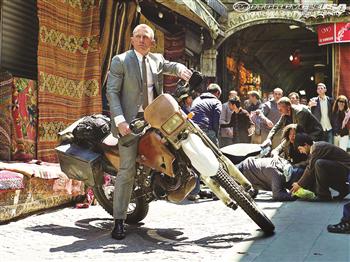
Turkey features a lot these days in the international news media, for reasons good and bad. For better or worse, Istanbul is once again taking its place as a world city and a hot tourist destination. Two recent mega movies locate at least some of their action in this 'city of the world's desire.' The 50th anniversary offering from the Ian Fleming franchise ‘Skyfall’ has motorcycle-mounted Bond James Bond/Daniel Craig pursuing his foe over the rooftops of the five hundred year-old Grand Bazaar. ‘Taken 2’, an action pic involving ex-CIA man Liam Neeson saving his family from a gang of evil Albanians (they get a bad press too, don't they!), spends more time in the city, but tends to focus, naturally enough, on the more oriental atmospheric parts of town.

While celebrity wisdom holds that any publicity is good publicity, there has been some criticism locally that the films pander to Western stereotypes of a culturally backward nation remarkable for little but its historical quaintness. The producers make no apology. Their purpose was not to advertise Turkey as a tourist destination, they said - and true enough. If you want to impart your own spin it'll cost you. Free publicity comes with another price.

So I was heartened to see a report in our local newspaper quoting Turkey's Minister of Culture and Tourism on the subject. The films may not have shown the whole Turkey, but what they did show is indisputably there. A democratic country doesn't control what visitors see. If we don't want visitors to see the decay and the backwardness, the solution, said Mr Günay, is in our own hands. Good for you, I thought. It seems to me also that the Minister's government is prepared to put its money where its mouth is. Witness its work on restoring historical sites, developing public transport infrastructure and pushing ahead with urban renewal.

Undoubtedly much remains to be done, and clearly the Minister is as aware of that as I am. Residents of Western European cities often have a stereotypical picture of Turks based on the ones they see around them - down-trodden women and bearded men isolating themselves in cultural enclaves, stubbornly adhering to their own language and traditions. Europeanised Turks in their own cities sometimes have a similar view, resentful of the flood of immigrants from the small towns and villages of Anatolia who have altered the cultural landscape of Istanbul and other coastal cities in the last forty years.

Well, we have had a feast of republican fervour in recent weeks, as Turks, quite rightly, celebrated the foundation of their secular democratic state, and commemorated the passing of its founder, Mustafa Kemal Atatürk. This Saturday, schools around the country will pay tribute to the work of their educators, for whom the great man set aside that date, 24 November, as Teachers' Day. In every public square and building in every corner of Turkey, you will see statues, busts, paintings and photographs of the nation's first president. Yet he himself was adamant that to remember his physical appearance was not enough[1]. Building a great country required an understanding of his philosophy - and foremost in this was his assertion that the future of the republic lay in education[2]. The new generations that would follow in his footsteps would be moulded by the nation's teachers - hence Teachers' Day.

Unfortunately, it is easier to pay homage to portraits and statues than to find money for schools and hospitals, teachers and doctors and nurses. It is easier to criticise and belittle the backward and uneducated than to take responsibility for educating them and raising their living standards. The dominant contemporary economic wisdom insists that the market is the best organizer; and private enterprise the best provider. It doesn't require a Harvard MBA, however, to understand that bottom-line accounting will inevitably focus on short-term profits at the expense of less tangible long-term goals - the very antithesis of what is required in the education and health sectors.

Sadly, vested business interests pull influential strings. 'Tax cuts for the wealthy' is another axiom of free market proponents - but until every individual or corporate entity in the country bears an equal burden of taxation, Atatürk's dream of raising the entire nation to a state of modernity will remain just a dream. 'Our new nation has no place for rigid social classes,' he said. 'The high class individual is the one who serves his or her nation.'[3] What follows from that is the understanding that merit, measured by service to the nation, will be rewarded. From my observation of private enterprise at work in the field of education, that is rarely the case. I am hopeful that lip-service to the memory of Atatürk is gradually being replaced by a genuine desire to work towards realizing his dream of greater equality for all in a civilized modern democratic republic, and I applaud the Minister of Culture and Tourism for his timely reminder.


[1] Beni görmek demek, mutlaka yüzümü görmek demek degildir. Benim fikirlerimi, benim duygularimi anliyorsaniz ve hissediyorsanız, bu yeterlidir.

[2] Öğretmenler, yeni nesil sizin eseriniz olacaktır.

[3] Millete efendilik yoktur. Ona hizmet etmek vardır. Bu millete hizmet eden onun efendisi olur.

Wednesday, 14 November 2012

Post Your Comments?

My apologies to readers who have been trying to post comments and meeting with frustration. I welcome comments and I'm trying to solve this problem. I've made one adjustment that may work. Try again and let's see. If you have any suggestions, please let me know. If all else fails, you can post your comment anonymously.

Monday, 12 November 2012

The Money Problem – Source and Solution (Guest Post)


I have had some feedback on economic and monetary ideas I have touched on in several of my posts. Here is an interesting one – with thanks to David McGregor http://sovereignlife.com/blog/:

Money and it’s creation is an interesting subject – and the fact is, the idea of "Social Credit" is on the rise yet again - as if economic hardship/depression is the ideal fertile ground for questioning the financial status quo.

And so it should be questioned.

We do indeed have a private banking system which has managed to create a monopoly on the creation of money. And they have done this by partnering with governments in an unholy alliance. 

In the "old" days Kings and governments had to live within their means. If the king wanted to go to war, he had to raise an army and pay them. And to do that he needed plenty of gold (or silver). No money, no war.

As democratic governance arose, there also arose the desire to have more money than could reasonably be taxed off the hapless citizens. That's when banks - and their nefarious fractional reserve banking - came to the rescue.

They in effect said, you can have as much money as you like - we'll lend it to you.

Ever since we have had spendthrift governments winning elections by bribing the electorate with "goodies' that could not be afforded, except by going into debt to the banks. Witness the mess Europe and most western countries are in today.

The "evil" inherent in modern banking is not that the banks are private, but that they have a monopoly on the actual creation of money out of thin air, which they lend at interest to all comers.

Giving the government this same licence, to "print money out of thin air" would not solve our problems one whit, but would in fact enable a government to go on a spending binge and ultimately generating a hyper-inflation of some sort. I hate to think what sort of control they could accomplish by having their dirty hands on the "printing presses".

The only remedy for our existing dilemma is to abolish the fraudulent fractional reserve system of money creation - which is the reason all banks are perpetually insolvent. A bank run is simply proof of the obvious - that the bank never has all the funds deposited with it.

In essence, fractional reserve banking means this: say I deposit $1,000 in the bank. The bank can now lend up to 90% of that. So Joe Blogs takes out a $900 loan. The bank now has two liabilities - my $1000 and Joe's $900. We are both entitled to take out our money - - but the bank only has the original $1000, while having $1,900 in circulation. This is the crux of the problem - not interest as such.

So how to get away from this clearly fraudulent system?

Money must be something that cannot be created. This is why gold and silver were always money - money that people freely chose via the free market.

Banks can only ever lend out what they have actually taken on deposit. So only funds on contractual term deposit can be lent out - so there is only one claimant to the funds at any one time.

Fiat money, as we know it, can work - provided people have faith in it. But having faith in paper money which is constantly subject to both bank and government manipulation is a recipe for disaster.

That is why I have a great interest in the monetary experiment known as Bitcoin - http://bitcoin.org

Here you have a privately issued fiat currency which cannot be manipulated. It has no central control. No company. No government. No counterfeiting. No inflation.

In fact, bitcoin is by nature deflationary - as only 21 million BTC can ever be in circulation. This means that as production rises, prices must fall - which is the natural order of things. 

A naturally deflating money encourages people to save (no interest required) because the value of their money is rising over time vis-à-vis spending power. These savings form the basis of capital formation, giving rise to investment and progress.

There is a growing market for bitcoins, and it is truly a subversive technology - one which has the potential to replace money as we know it, if/when it can reach a break-out of users and usage.

A monetary crisis in the banking sector, or full-blown hyperinflation could provide a trigger.

You can see one of the most popular bitcoin exchange markets here: http://www.mtgox.com

I purchased $2,000 worth of BTC around a year ago, at the price of $5 per BTC. It's currently $10.85 as I write this.

It's interesting to note how bitcoins are tracking inflation, in a similar way to gold - because neither BTC nor gold can be created out of thin air, and are not subject to human intervention or manipulation.

What's more, bitcoin represents true financial privacy - encrypted and outside the system. 

As we speak there are Bitcoin apps being launched on the Apple store, enabling people to pay for things and pay each other with the tap of a finger.

I find this technology to be a potential harbinger of things to come, and as an "experiment" it holds great promise in my opinion - to finally turn the money system around so it actually does what it's supposed to do - instead of being the means of our enslavement.